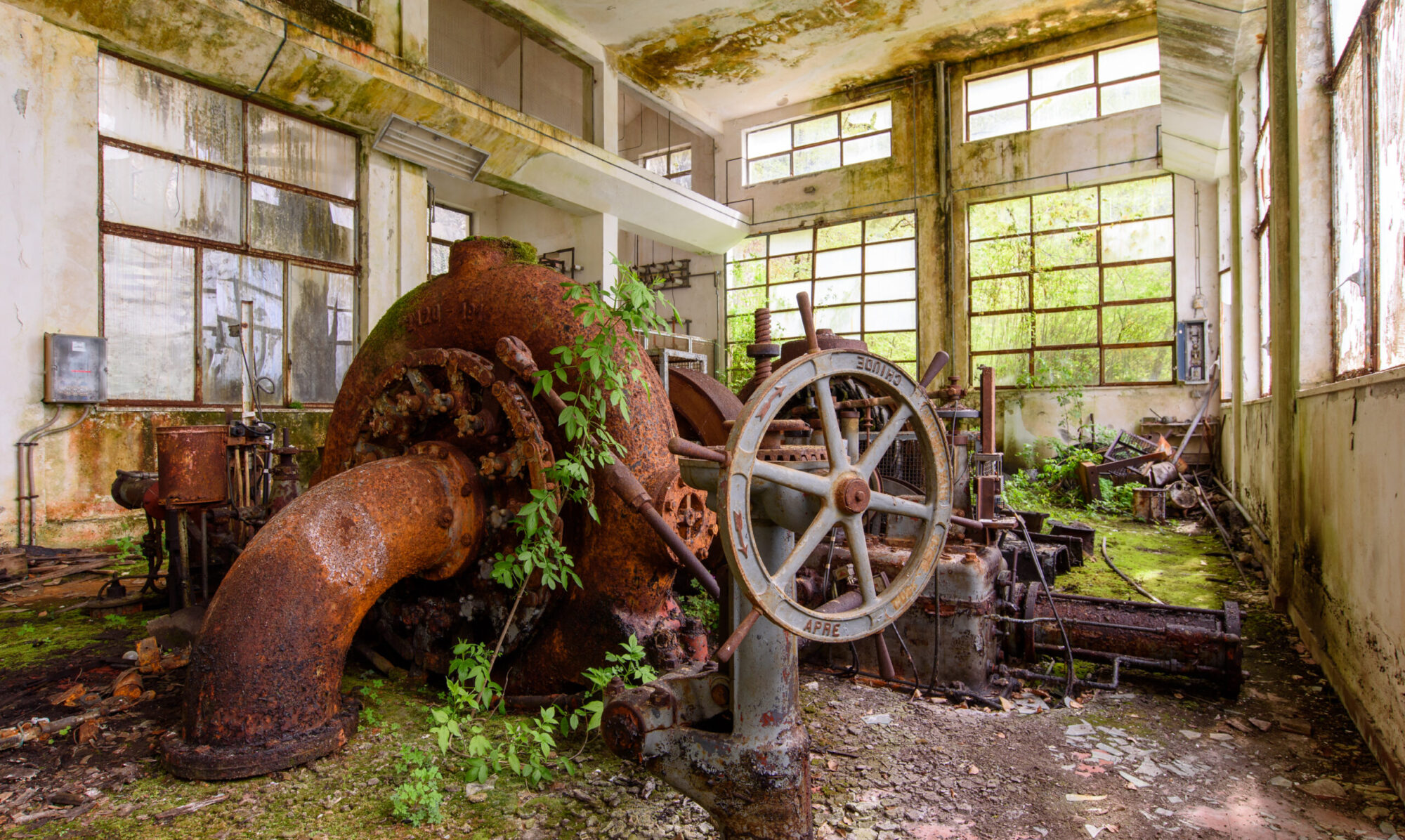

We’re two brothers who hold down full-time jobs, lead relatively normal lives but over the last twenty years we have regularly disappeared into the wilderness in search of abandoned buildings and urban exploration. Occasionally we remember other useful items such as water, torches, the odd snack and even a camera battery.
TheTimeChamber is a collection of histories for each of the place we have visited over this time, its built around the photographs we have taken and our interest in the social history of the places we’ve visited. Alongside our photographs, we’ve tried to uncover the stories behind the buildings, institutions and establishments that the modern world has largely forgotten and discarded.
It all started in 2007, when we independently stumbled across the world of urban exploration online. We quickly discovered that there was around 100 acres of derelict industry was sitting practically on our doorstep, ripe for exploration. Since then we have not looked back, except when we hear the scuffle of footsteps behind us or the loud banging of a door in the wind. It has been an adventure filled with tense moments, incredibly stupid moments, and the occasional fits of uncontrollable laughter in places where it probably wasn’t advisable.We can’t quite explain why we’re drawn to these places. Perhaps it’s something to do with spending five days a week cooped up in an office. Whatever it is, it’s a bug we can’t always ignore.
We blame That Smell.
The Exploration Archive
TheTimeChamber started life as somewhere to share a few of the photographs we had taken exploring with the wider world. While at university, we began researching the places we visited and gradually developed an interest in their histories. The photographs from our first explores turned into a few articles, which turned into a much larger website than we ever intended. After twenty years, the website has grown into a fairly substantial archive of photography, historical articles and the occasional rambling account of our misadventures via the blog.
We initially developed an obsession with Victorian Asylums and spent a few years chasing them across the country, this followed up with an obsession into Cold War military installations, particularly those that involved going underground. Subsequently, we helped relaunch the County Asylums website, we become involved in the restoration of Cuckfield ROC Post and preservation work at RAF Wartling, both of which are documented here.
We split the website down into two sections, Places we have explored and a section dedicated to our photography exploits unrelated to our explores.
After twenty years of exploring we have gathered a rather substantial collection of photographs, historical research and accounts of forgotten places across the UK and further afield. We have recorded the majority of them here, and you’ll find the archive has been organised into the following sections:
- The Victorian Asylums
- The Royal Observer Corps
- Military Installations
- The ROTOR Project
- The Civil Defence
- WWII Deep Shelters
- Underground sites
- Everything else (Industrial, Residential etc)
Recent Explores
See below for our recent explores.
-
South-East Command Bunker, Monty’s Bunker, Reigate

During the first half of 1941 a network of tunnels was excavated into an old chalk quarry just north of the town of Reigate, known as Underbeeches, that had been abandoned by the owners due to instability in the chalk. The site provided the ideal location for an underground shelter as it provided 90 feet…
-
Maenofferen Slate Quarry, North Wales

Maenofferen Slate Quarry is a substantial and entirely underground slate quarry in Blaenau Ffestiniog perched 1300 feet above sea level in the Welsh Mountains to the west of the Town. Maenofferen holds a significant place in the history of the slate industry in North Wales as the quarry provides considerable information for understanding the development…
-
Cwt-y-Bugail Slate Quarry, North Wales

Cwt y Bugail Quarry is a remote Welsh Slate Quarry high up in the mountains between Blaenau Ffestiniog and Cwm Penmachno, North Wales. It’s origins lay as an enlargement of the older Bugail quarry workings that were opened in the 1820’s when Adam Gregory, who leased the Blaen y Cwm quarry above Blaenau Ffestiniog from…


